Group Charter: Voli di Gruppo per Sport, Turismo ed Eventi
Squadre, delegazioni aziendali, gruppi di tifosi o comitive turistiche: quando a viaggiare non è una persona ma un gruppo, la logica del charter cambia completamente.
Group Charter: Group Flights for Sport, Tourism and Events
Teams, corporate delegations, groups of fans or tour parties: when it's not one person travelling but a whole group, the logic of chartering changes completely.
"Un aereo di linea unisce sconosciuti che condividono lo spazio, ma hanno mete diverse. Un group charter, invece, unisce persone diverse che condividono la stessa identica meta. Noleggiare un intero volo non è solo una scelta logistica o un comfort esclusivo: è una dichiarazione d'intenti. Significa staccarsi da terra insieme, isolarsi dal resto del mondo per muoversi come un unico organismo. In quel microcosmo sospeso a dodicimila metri d'altezza, non ci sono passeggeri casuali. Ogni posto è occupato da un tassello fondamentale dello stesso mosaico. Quando un gruppo decolla su un volo dedicato, la forza del team supera la forza di gravità: si viaggia alla stessa velocità, con la stessa spinta e verso un unico orizzonte. Perché le grandi visioni non si raggiungono un biglietto alla volta, ma sollevando l'intera squadra verso la stessa rotta."
Il group charter nasce proprio per risolvere questo problema: mettere a disposizione di un gruppo — sportivo, aziendale o turistico — un aeromobile interamente dedicato, con un solo orario da rispettare, una capienza pensata su misura per il numero di persone che compongono il gruppo stesso e per i bagagli che portano con sé. Indicativamente, si parla di Group Charter a partire da circa 18-20 passeggeri: sotto questa soglia rientra generalmente nel charter privato "standard", mentre per un numero superiore di passeggeri sono necessari aeromobili di categoria superiore, con una logistica diversa.
Trasferte sportive: squadre, delegazioni, tifosi
Dove il charter di gruppo nasce
Il charter per squadre sportive è probabilmente l'applicazione più matura di questo servizio. Una rosa al completo — giocatori, staff tecnico, medico, dirigenza — viaggia con un volume di bagagli e attrezzatura sportiva che un volo di linea gestisce male, a costi imprevedibili: borsoni, materiale medico, attrezzature sportive, talvolta persino strumentazione tecnica. Il group charter sportivo risolve il problema alla radice: un aeromobile con la capienza giusta, orari costruiti attorno al calendario delle partite invece che agli slot disponibili di una compagnia di linea, partenze pianificate per massimizzare il riposo tra una trasferta e l'altra.
Lo stesso vale per grandi eventi sportivi come Mondiali, Champions League, Olimpiadi o Gran Premi di Formula 1: delegazioni federali, gruppi di tifosi organizzati o intere comitive aziendali che vogliono seguire l'evento dal vivo trovano nel volo charter per eventi sportivi l'unico modo realistico di muoversi in blocco, evitando la frammentazione (e i prezzi impazziti) dei voli di linea nei giorni a ridosso dell'evento.
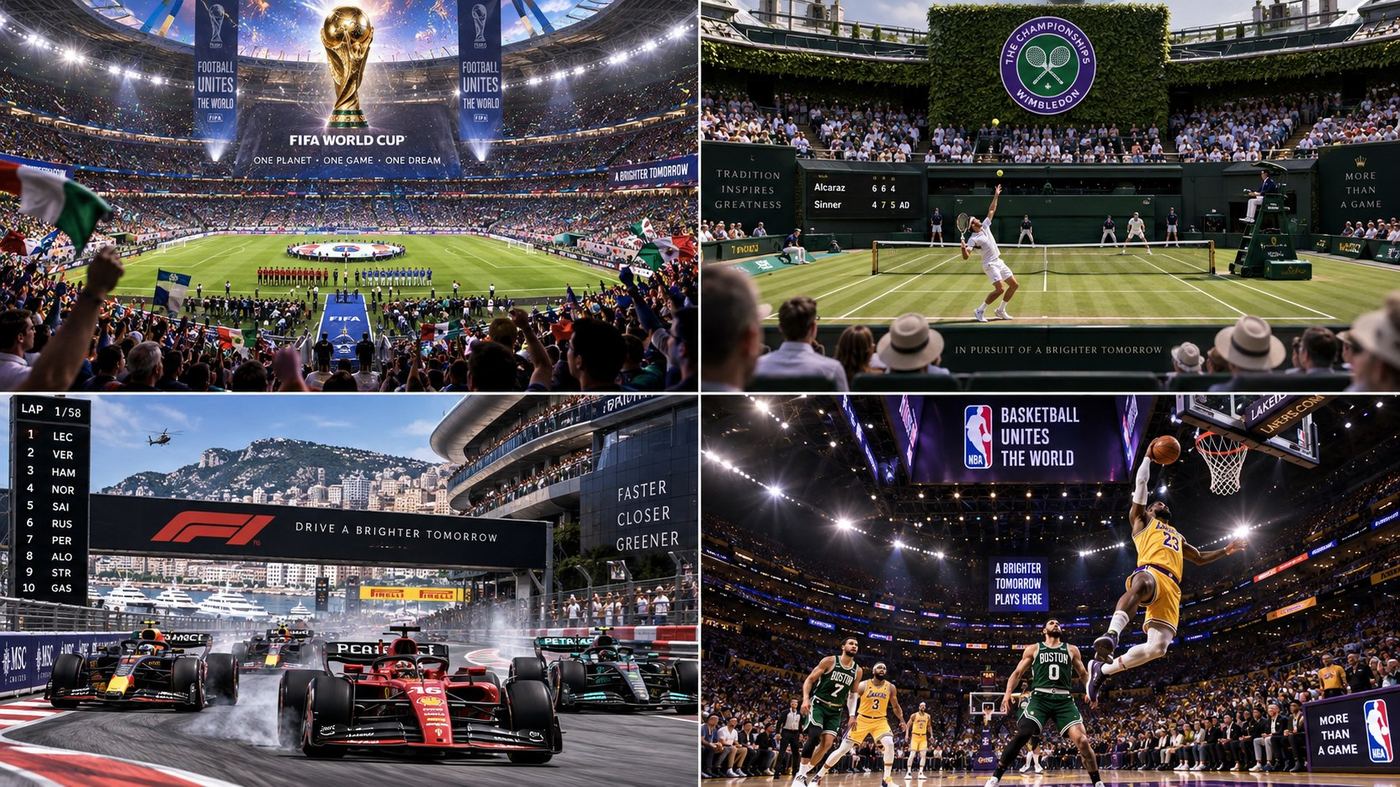
Mondiali, Wimbledon, Formula 1, NBA: i grandi eventi sportivi sono tra le occasioni più frequenti per organizzare un group charter, sia per le squadre sia per chi le segue.
Tour musicali, grandi eventi e riunioni di famiglia
Non solo sport e azienda
Il group charter copre anche territori meno ovvi ma altrettanto frequenti. I tour musicali ne sono un esempio classico: artisti, troupe tecnica e crew viaggiano insieme, con orari coordinati sul calendario degli spettacoli e spazio sufficiente per la strumentazione al seguito. Allo stesso modo, grandi riunioni di famiglia — anniversari, matrimoni multigenerazionali, ricorrenze che riuniscono parenti sparsi in più paesi — trovano nel charter di gruppo l'unico modo per far arrivare tutti insieme, nello stesso momento, senza il puzzle di voli di linea con scali e orari diversi.
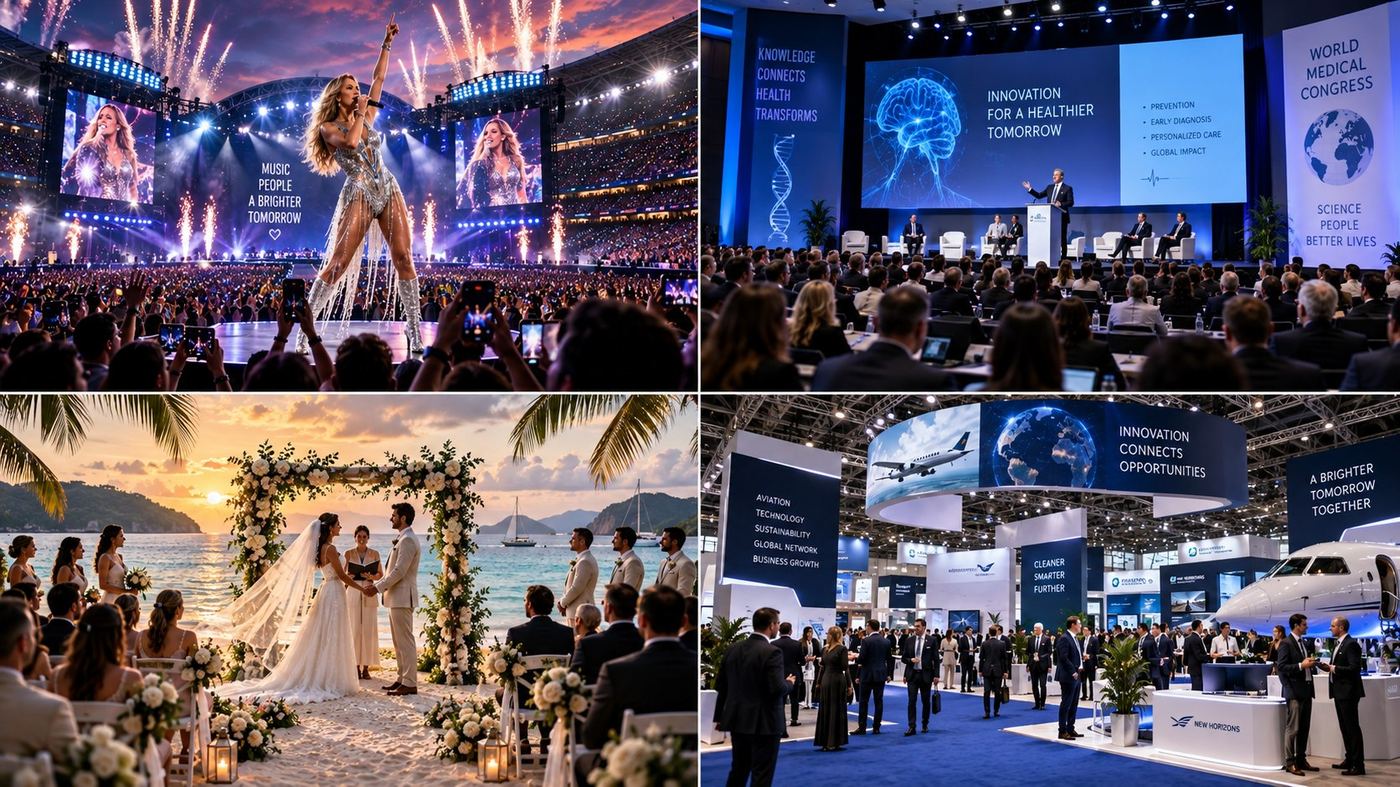
Tour musicali, congressi, matrimoni multigenerazionali e grandi fiere: tutte occasioni in cui il gruppo deve arrivare insieme, senza scali o coincidenze mancate.
Eventi aziendali e team building
Quando il viaggio è parte dell'evento
Il segmento aziendale — che nel settore si indica spesso con l'acronimo MICE (Meeting, Incentive, Conventions, Exhibitions) — è tra i più rilevanti per il group charter. Rientrano qui i viaggi incentive, quando un'azienda premia dipendenti o agenti con un'esperienza di gruppo in una meta esclusiva; i lanci di prodotto e le conferenze, che richiedono di spostare delegati, giornalisti e partner commerciali verso l'evento nello stesso momento; e le grandi fiere internazionali, dove interi team aziendali o intere delegazioni di espositori devono raggiungere hub congressuali spesso congestionati proprio nei giorni di apertura.
Per un'azienda, un viaggio incentive o un'esperienza di team building comincia, di fatto, già a bordo. Far viaggiare l'intero gruppo insieme, con lo stesso orario e nello stesso ambiente, trasforma il trasferimento da tempo morto a parte integrante dell'esperienza. Il group charter aziendale consente inoltre coordinamento perfetto degli orari con il programma dell'evento a destinazione, senza il rischio che una parte del gruppo arrivi in ritardo o su voli diversi.
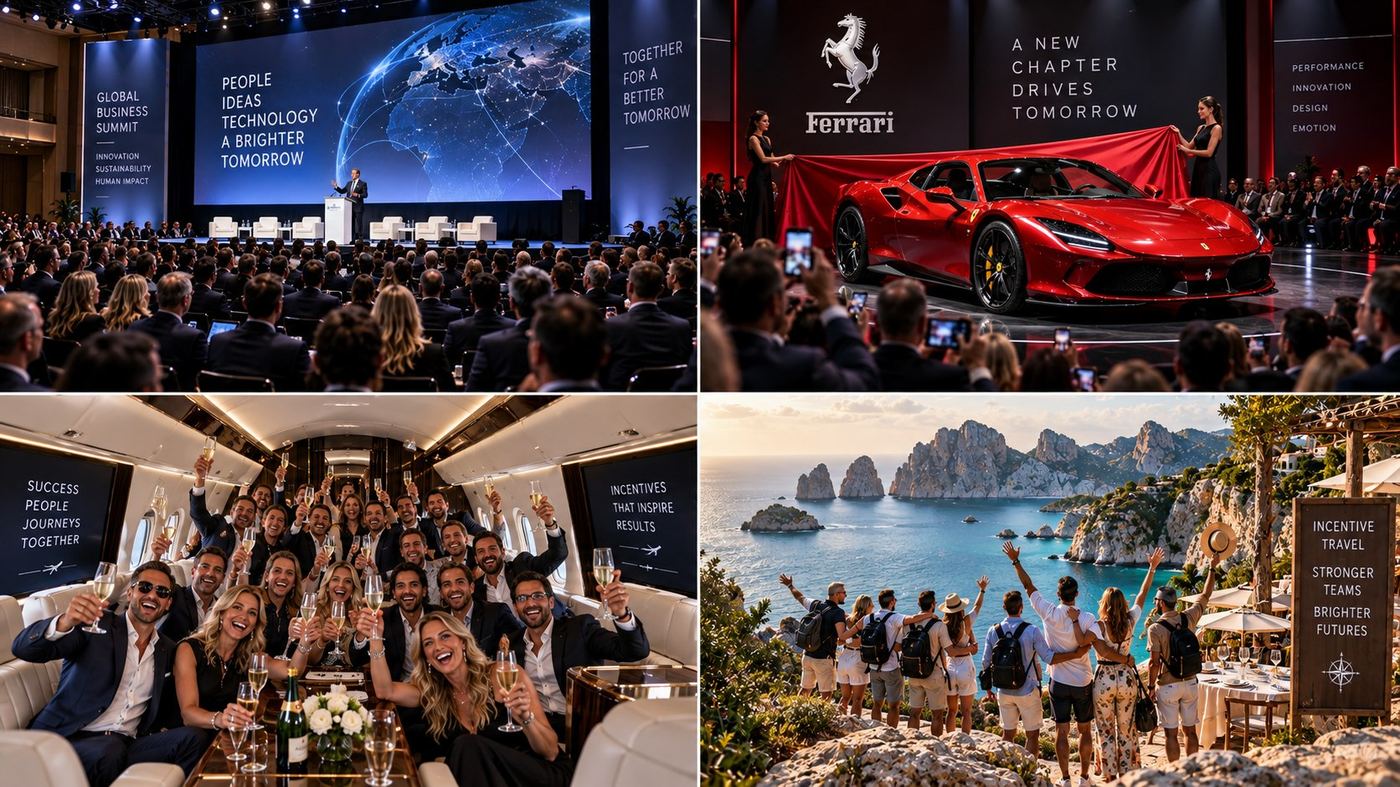
Convention, lanci di prodotto, viaggi incentive e team building: il segmento MICE è tra i più rilevanti per il group charter aziendale.
Turismo di massa e Fly & Cruise
La forma più antica di charter di gruppo
È storicamente il segmento più conosciuto del volo charter: i grandi tour operator noleggiano interi aeromobili su base stagionale per collegare direttamente le città di origine con le mete balneari più richieste — Mar Rosso, Baleari, Caraibi — vendendo i posti all'interno di pacchetti volo+hotel. Una variante sempre più diffusa è il Fly & Cruise: le compagnie di navigazione noleggiano voli di gruppo dedicati per trasportare contemporaneamente centinaia di passeggeri dall'aeroporto più vicino direttamente al porto d'imbarco della nave, eliminando scali intermedi e tempi morti tra volo e imbarco. Un discorso simile riguarda anche la rotazione di equipaggi per il settore energetico offshore e quello marittimo commerciale, dove gruppi di lavoratori specializzati devono essere spostati con regolarità e puntualità tra basi logistiche e siti operativi.
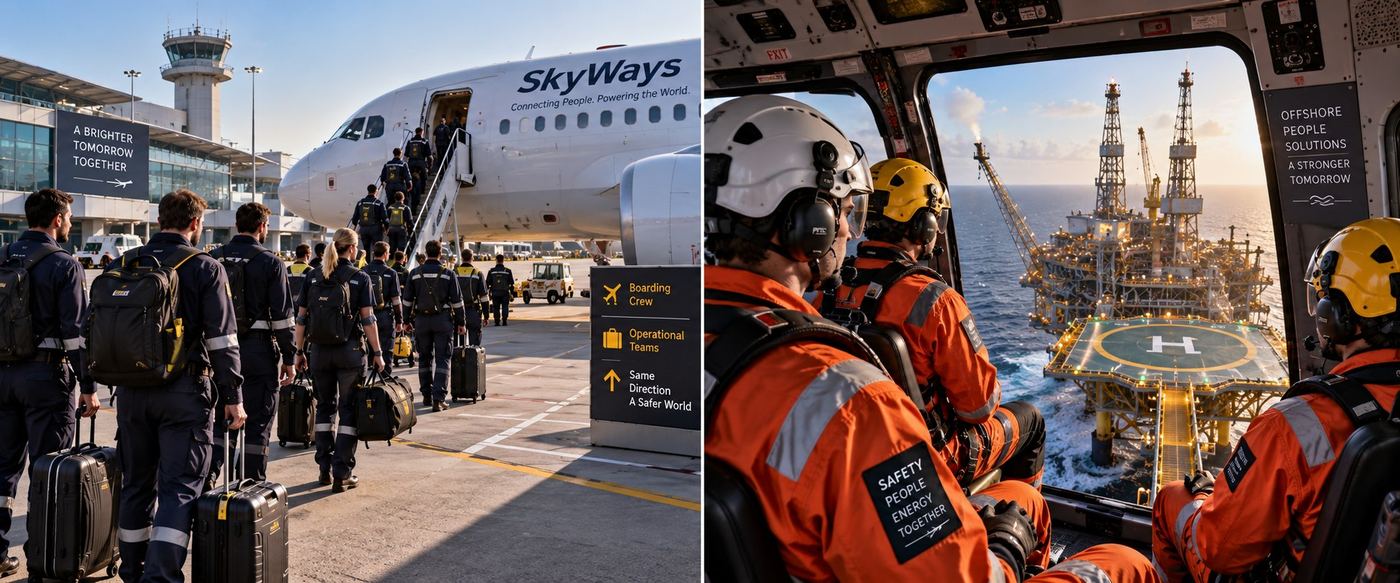
La rotazione di equipaggi specializzati per il settore energetico offshore e marittimo segue la stessa logica del group charter: spostare interi team con regolarità e puntualità.
Personalizzazione: il gruppo, il brand, i colori sociali
Uno dei vantaggi meno noti del group charter è la possibilità di personalizzazione dell'aeromobile: livrea esterna nei colori sociali della squadra o dell'azienda, poggiatesta personalizzati con il logo, annunci di bordo dedicati, catering pensato su misura (incluse esigenze nutrizionali specifiche per gli atleti), materiale promozionale a bordo. Per una squadra sportiva o un brand aziendale, il volo charter diventa così anche un'occasione di visibilità — l'aereo stesso comunica l'identità del gruppo che trasporta, dal momento dell'imbarco fino all'arrivo.
"Con un gruppo, il vero lusso non è lo spazio in più a bordo — è la certezza che tutti, davvero tutti, siano sullo stesso volo, allo stesso orario, verso lo stesso obiettivo."
Quale aeromobile per quale gruppo
La scelta dipende essenzialmente dal numero di passeggeri e dal volume di bagagli/attrezzatura al seguito, non da un unico modello standard:
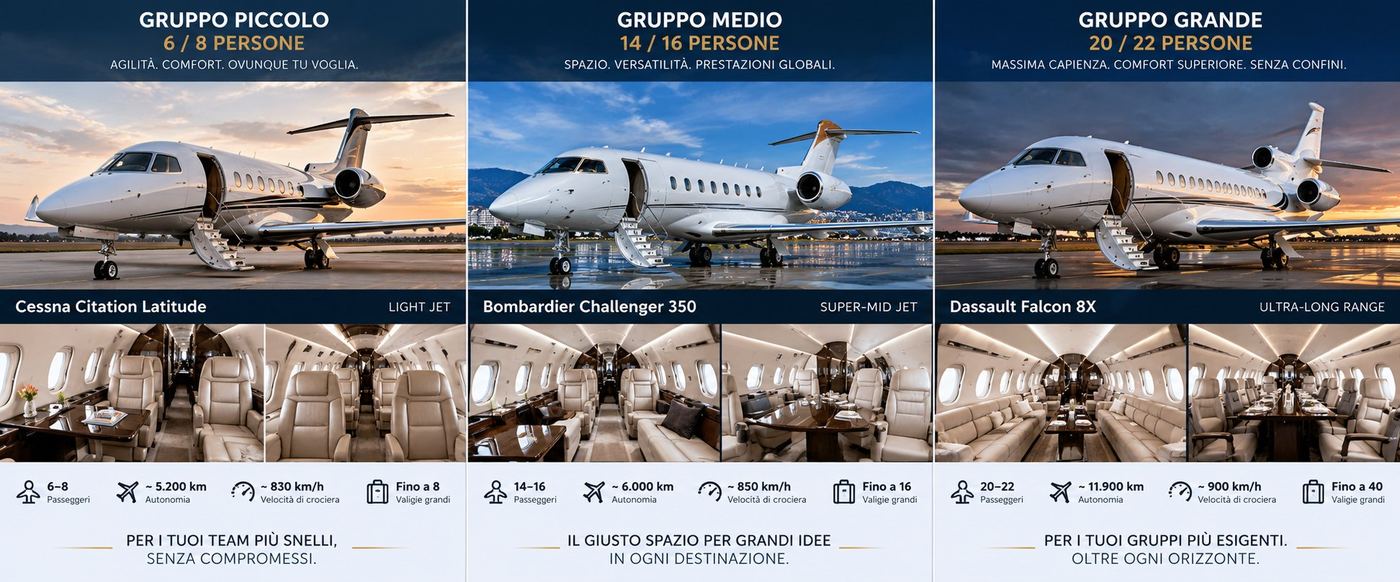
Gruppo piccolo, gruppo medio e gruppo grande: la capienza dell'aeromobile si dimensiona sul gruppo, non il contrario.
Per un gruppo piccolo (indicativamente 6-8 persone) un light jet come il Cessna Citation Latitude offre agilità e comfort su qualunque tratta. Un gruppo medio (14-16 persone) trova nel super-mid jet, ad esempio il Bombardier Challenger 350, lo spazio e le prestazioni per collegamenti anche intercontinentali. Per un gruppo grande (20-22 persone) un aeromobile ultra-long range come il Dassault Falcon 8X garantisce la massima capienza senza compromessi di comfort. Per i gruppi più numerosi — oltre le venti persone, come intere squadre con staff al completo o grandi comitive turistiche — per non spezzare il gruppo si valutano aeromobili di categoria superiore o, ove necessario, l'impiego di aeromobili impiegati normalmente in aviazione commerciale che vengono temporaneamente "staccati" dal servizio di linea e noleggiati privatamente.
Come funziona: dalla richiesta al decollo
Raccolta delle esigenze del gruppo. Numero di passeggeri, volume di bagagli o attrezzatura sportiva, eventuali esigenze specifiche (catering, materiale medico, spazio per attrezzature).
Selezione dell'aeromobile più adatto per capienza.
Sincronizzazione con il calendario dell'evento: orari costruiti attorno alla partita, alla convention o al programma della trasferta, non attorno agli slot di un vettore di linea.
Organizzazione dei trasferimenti di terra. Il gruppo non viene "abbandonato" all'arrivo in aeroporto: viene trasferito con mezzi adeguati al numero di passeggeri fino alla destinazione finale (hotel, stadio, centro congressi, porto...).
Personalizzazione, se richiesta: livrea, catering dedicato, materiale promozionale a bordo.
Assistenza in aeroporto, con accesso a terminal executive, corsie dedicate e tempi di imbarco ridotti per l'intero gruppo.
Come lavoriamo con Your Private Jet
Il group charter è uno dei servizi in cui la nostra capacità organizzativa in qualità di Air Charter Broker conta di più: non ci limitiamo a selezionare l'aeromobile più adatto al gruppo specifico, ma coordiniamo anche gli orari e tutta la logistica che ruota attorno al calendario reale dell'evento (sportivo, aziendale o turistico che sia).
I vantaggi principali rispetto ai voli di linea
Vantaggio
In cosa consiste
Flessibilità totale
Orari di decollo decisi dal gruppo, con possibilità di usare aeroporti secondari più vicini alla destinazione finale.
Esperienza su misura
Personalizzazione del catering, dei banchi check-in dedicati e del branding a bordo (es. loghi aziendali sui sedili).
Logistica semplificata
Il gruppo viaggia unito, azzerando il rischio che parte del team perda una coincidenza o resti a terra per overbooking.
Gestione bagagli speciali
Trasporto agevole di attrezzature sportive ingombranti, strumenti musicali o materiale delicato nello stesso volo.
Domande frequenti sul group charter
Qual è il numero minimo di passeggeri per un group charter?
Indicativamente si parla di group charter a partire da circa 18-20 passeggeri. Per gruppi più piccoli, un charter privato standard è di solito la soluzione più adatta, con lo stesso livello di servizio ma su un aeromobile di categoria diversa.
Che differenza c'è tra un group charter e un charter privato?
Un charter privato è pensato per un numero contenuto di passeggeri su un aeromobile più piccolo. Un group charter serve invece comitive più numerose, generalmente su aeromobili di categoria superiore o, per i gruppi molto grandi, su più aeromobili coordinati in parallelo.
Un group charter può trasportare anche attrezzatura sportiva o materiale da tour?
Sì. Attrezzatura sportiva, materiale medico o strumentazione da tour possono viaggiare insieme al gruppo, purché la capienza dell'aeromobile scelto ne tenga conto fin dalla fase di pianificazione.
È possibile prenotare un group charter di sola andata?
Sì, un group charter può essere organizzato sia di sola andata sia andata e ritorno, con l'orario costruito interamente attorno alle esigenze del gruppo.
Hai una richiesta specifica?
Contattaci per ricevere una valutazione personalizzata in base alla tratta, al numero di passeggeri e alle tue esigenze operative.
"A scheduled airliner brings together strangers who share the space but not the destination. A group charter, by contrast, brings together different people who share the exact same destination. Chartering an entire flight isn't just a logistical choice or an exclusive comfort: it's a statement of intent. It means leaving the ground together, cut off from the rest of the world, moving as a single organism. In that microcosm suspended at twelve thousand metres, there are no random passengers. Every seat is filled by an essential piece of the same mosaic. When a group takes off on a dedicated flight, the strength of the team overcomes the pull of gravity: everyone travels at the same speed, with the same momentum, toward a single horizon. Because great visions aren't reached one ticket at a time, but by lifting the whole team onto the same course."
The group charter exists precisely to solve this problem: putting an entire aircraft at the disposal of a group — sporting, corporate or leisure — with a single schedule to respect, and capacity built around the number of people in the group and the luggage they bring with them. As a rough guide, we speak of Group Charter from around 18-20 passengers upward: below that threshold it generally falls within "standard" private charter, while above it, higher-category aircraft and different logistics are required.
Sports Travel: Teams, Delegations, Fans
Where group chartering began
Charter for sports teams is probably the most mature application of this service. A full squad — players, technical and medical staff, management — travels with a volume of luggage and sporting equipment that a scheduled flight handles poorly, at unpredictable cost: kit bags, medical supplies, sports equipment, sometimes even technical gear. Sports group charter solves the problem at its root: an aircraft with the right capacity, a schedule built around the fixture calendar rather than a scheduled carrier's available slots, and departures planned to maximise rest time between one away trip and the next.
The same applies to major sporting events such as World Cups, the Champions League, the Olympics or Formula 1 Grands Prix: federation delegations, organised groups of fans or entire corporate parties wanting to follow the event live find in charter flights for sporting events the only realistic way to move as a group, avoiding the fragmentation (and the runaway prices) of scheduled flights in the days around the event.
World Cups, Wimbledon, Formula 1, the NBA: major sporting events are among the most common occasions for organising a group charter, both for the teams and for those following them.
Music Tours, Major Events and Family Gatherings
Not just sport and business
Group charter also covers less obvious but equally common territory. Music tours are a classic example: artists, technical crew and staff travel together, with schedules coordinated around the show calendar and enough space for the equipment they bring along. Likewise, large family gatherings — anniversaries, multi-generational weddings, celebrations that bring together relatives scattered across several countries — find in group charter the only way to get everyone there together, at the same time, without the puzzle of scheduled flights with different stopovers and schedules.
Music tours, conferences, multi-generational weddings and major trade fairs: all occasions where the group needs to arrive together, with no stopovers or missed connections.
Corporate Events and Team Building
When the journey is part of the event
The corporate segment — often referred to in the industry by the acronym MICE (Meetings, Incentives, Conventions, Exhibitions) — is among the most significant for group charter. This includes incentive trips, when a company rewards employees or agents with a group experience at an exclusive destination; product launches and conferences, which require moving delegates, journalists and business partners to the event at the same time; and major international trade fairs, where entire company teams or whole delegations of exhibitors need to reach often congested convention hubs right on opening days.
For a company, an incentive trip or a team building experience effectively begins on board. Having the whole group travel together, on the same schedule and in the same environment, turns the transfer from dead time into an integral part of the experience. Corporate group charter also allows perfect coordination of timing with the programme at the destination, with no risk of part of the group arriving late or on separate flights.
Conventions, product launches, incentive trips and team building: the MICE segment is among the most significant for corporate group charter.
Mass Tourism and Fly & Cruise
The oldest form of group charter
This is historically the best-known segment of charter flying: major tour operators charter entire aircraft on a seasonal basis to connect origin cities directly with the most sought-after beach destinations — the Red Sea, the Balearics, the Caribbean — selling seats as part of flight-plus-hotel packages. An increasingly common variant is Fly & Cruise: cruise lines charter dedicated group flights to carry hundreds of passengers at once from the nearest airport directly to the ship's port of embarkation, eliminating intermediate stopovers and dead time between the flight and boarding. A similar logic applies to crew rotation for the offshore energy sector and commercial shipping, where groups of specialised workers must be moved regularly and punctually between logistics bases and operational sites.
Crew rotation for the offshore energy and commercial shipping sectors follows the same logic as group charter: moving whole teams regularly and on time.
Customisation: the Group, the Brand, the Team Colours
One of the lesser-known advantages of group charter is the ability to customise the aircraft: exterior livery in the team's or company's colours, custom headrests with the logo, dedicated onboard announcements, catering tailored to specific needs (including specific nutritional requirements for athletes), and promotional material on board. For a sports team or a corporate brand, the charter flight thus also becomes an opportunity for visibility — the aircraft itself communicates the identity of the group it's carrying, from boarding through to arrival.
"With a group, the real luxury isn't extra space on board — it's the certainty that everyone, absolutely everyone, is on the same flight, at the same time, heading toward the same goal."
Which Aircraft for Which Group
The choice depends essentially on the number of passengers and the volume of luggage or equipment carried, not on a single standard model:
Small group, medium group and large group: the aircraft's capacity is sized to the group, not the other way around.
For a small group (roughly 6-8 people) a light jet such as the Cessna Citation Latitude offers agility and comfort on any route. A medium group (14-16 people) finds in a super-midsize jet, such as the Bombardier Challenger 350, the space and performance for connections even on intercontinental routes. For a large group (20-22 people) an ultra-long-range aircraft such as the Dassault Falcon 8X guarantees maximum capacity with no compromise on comfort. For the largest groups — beyond twenty people, such as entire teams with a full staff complement or large tour parties — to avoid splitting the group up, higher-category aircraft are considered or, where necessary, aircraft normally used in commercial aviation that are temporarily taken off scheduled service and chartered privately.
How It Works: From Request to Take-off
Gathering the group's requirements. Number of passengers, volume of luggage or sports equipment, and any specific needs (catering, medical supplies, space for equipment).
Selecting the most suitable aircraft for capacity.
Synchronising with the event calendar: schedules built around the match, the convention or the trip's programme, not around a scheduled carrier's slots.
Organising ground transfers. The group is never "left stranded" on arrival at the airport: it is transferred with vehicles suited to the number of passengers all the way to the final destination (hotel, stadium, convention centre, port…).
Customisation, if requested: livery, dedicated catering, promotional material on board.
Airport assistance, with access to executive terminals, dedicated lanes and reduced boarding times for the whole group.
How We Work at Your Private Jet
Group charter is one of the services where our organisational capability as an Air Charter Broker matters most: we don't just select the aircraft best suited to the specific group, we also coordinate the schedule and all the logistics built around the real calendar of the event, whether sporting, corporate or leisure.
The main advantages over scheduled flights
Advantage
What it means
Total flexibility
Take-off times decided by the group, with the option of using secondary airports closer to the final destination.
Tailored experience
Customised catering, dedicated check-in desks and onboard branding (e.g. company logos on the seats).
Simplified logistics
The group travels together, eliminating the risk of part of the team missing a connection or being bumped due to overbooking.
Special luggage handling
Easy transport of bulky sports equipment, musical instruments or delicate items on the same flight.
Frequently Asked Questions About Group Charter
What is the minimum number of passengers for a group charter?
As a rough guide, we speak of group charter from around 18-20 passengers upward. For smaller groups, a standard private charter is usually the best fit, with the same level of service but on a different category of aircraft.
What's the difference between a group charter and a private charter?
A private charter is designed for a limited number of passengers on a smaller aircraft. A group charter, by contrast, serves larger parties, generally on higher-category aircraft or, for very large groups, on multiple aircraft coordinated in parallel.
Can a group charter also carry sports equipment or tour gear?
Yes. Sports equipment, medical supplies or touring gear can travel with the group, provided the capacity of the chosen aircraft accounts for it from the planning stage onward.
Is it possible to book a one-way group charter?
Yes, a group charter can be organised either one-way or round-trip, with the schedule built entirely around the group's needs.
Have a specific request?
Contact us for a personalised assessment based on the route, number of passengers and your operational needs.