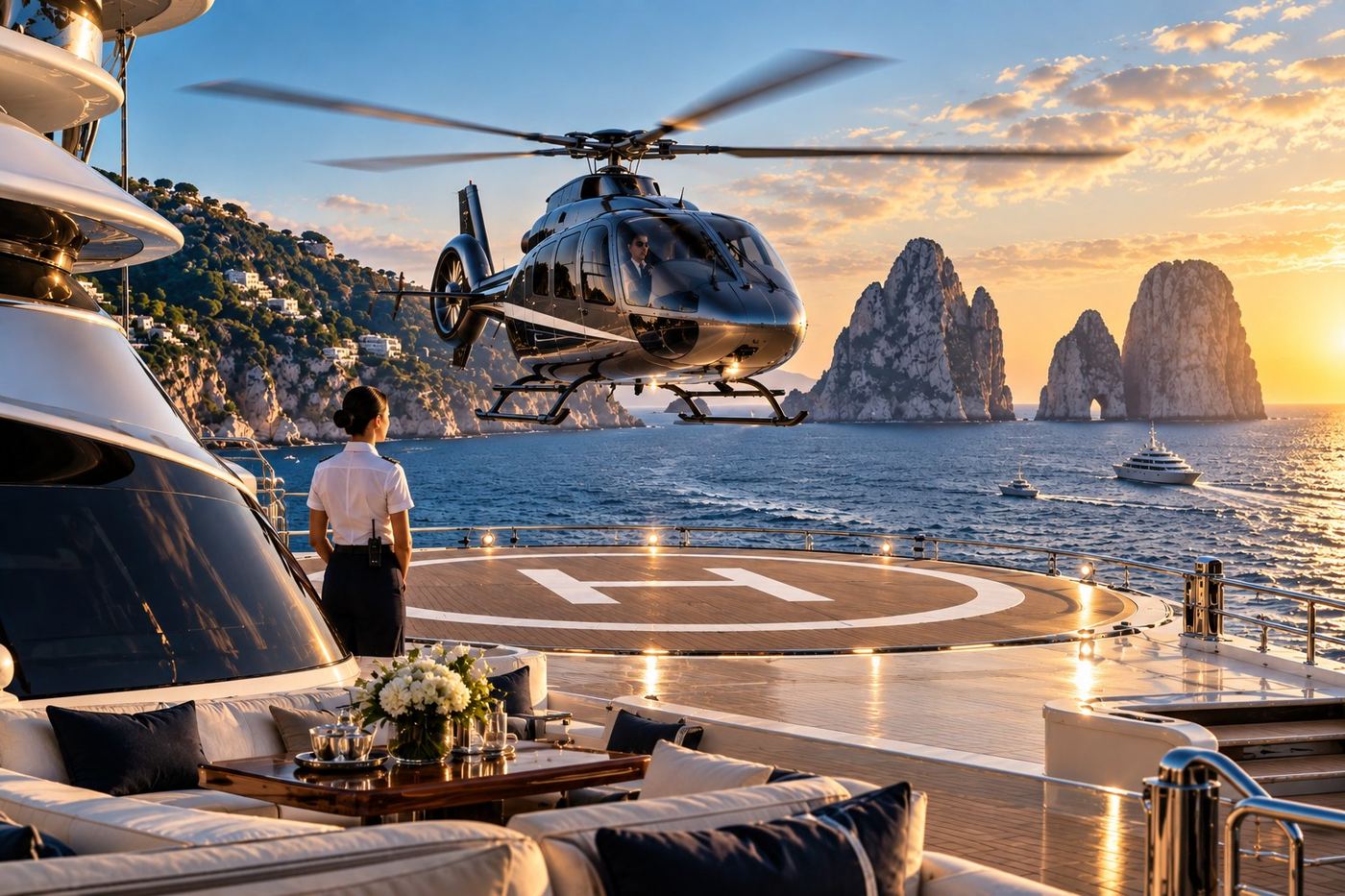
Door-to-Deck: dalla Porta di Casa al Ponte dello Yacht
Auto, jet privato ed elicottero coordinati in un unico viaggio senza interruzioni: non importa che lo yacht sia ormeggiato in porto o in navigazione in mare aperto.
Door-to-Deck: From Your Front Door to the Yacht's Deck
Car, private jet and helicopter coordinated as a single, uninterrupted journey: it makes no difference whether the yacht is moored in port or under way on open water.
"C'è una differenza sottile ma decisiva tra 'arrivare vicino allo yacht' e 'arrivare sullo yacht'. Il primo servizio lo offre qualunque agenzia di viaggi. La seconda richiede che qualcuno del mestiere, dietro le quinte, abbia sincronizzato alla perfezione TRE servizi indipendenti e distinti tra loro (un'auto, un aereo e un elicottero) così che l'ultimo gradino sceso dal passeggero lo porti direttamente sul ponte dello yacht."
Questo è, in sintesi, un servizio door-to-deck: l'accompagnamento del cliente dalla porta di casa fino al ponte dello yacht, senza che nulla in mezzo (una coincidenza mancata per un volo in ritardo, un bagaglio smarrito, un trasbordo mal calcolato) venga lasciato al caso.
Cos'è un trasferimento door-to-deck
Il tratto distintivo di questo servizio è l'intermodalità: tre mezzi di trasporto diversi che il cliente dovrebbe andarsi a cercare e prenotare separatamente, che con noi invece vengono trattati come un unico viaggio gestito da un'unica regia. Non tre prenotazioni indipendenti che il cliente deve far da solo e incastrare tra loro, ma un unico itinerario di viaggio con un unico coordinamento, in cui ogni passaggio è calcolato in funzione di quello successivo.
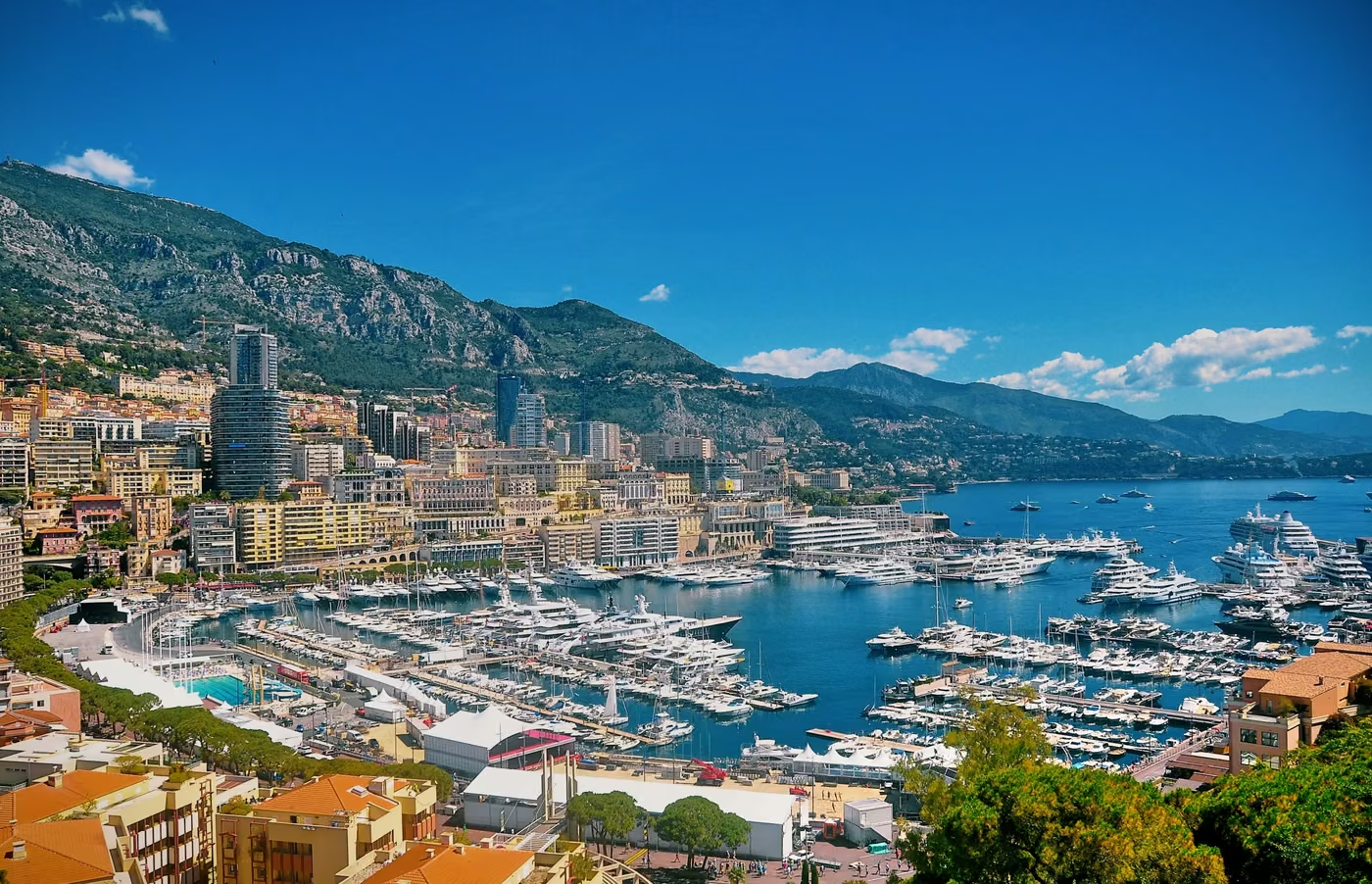
Che lo yacht sia ormeggiato in un porto come Monaco o sia in navigazione attorno alle Eolie, il principio del door-to-deck resta sempre lo stesso: un unico viaggio coordinato dalla porta di casa al ponte del natante, anziché tre problemi separati da dover gestire.
Prima tratta: NCC da casa all'aeroporto
Il punto di partenza
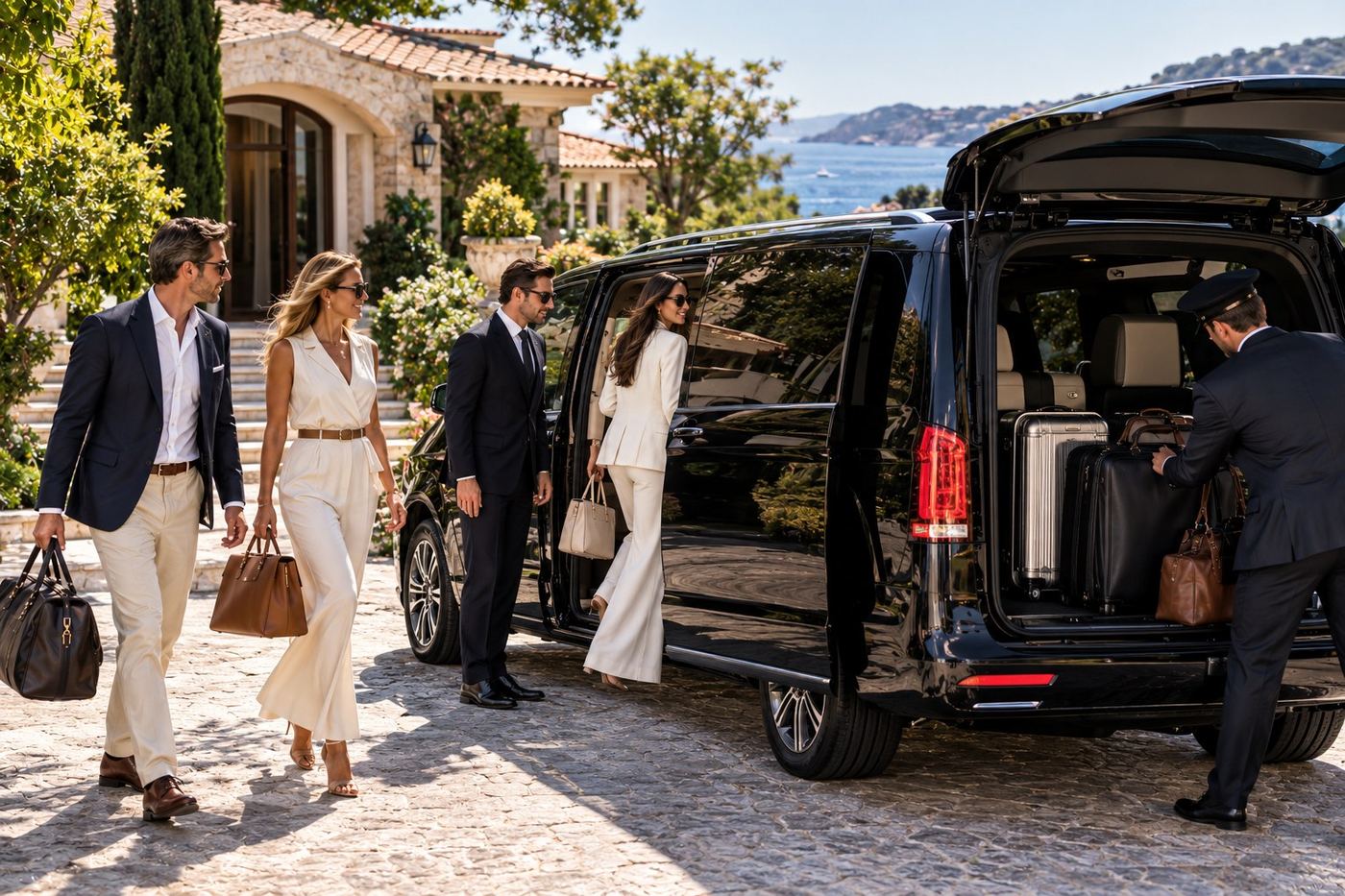
Il viaggio inizia con un servizio NCC munito di autoveicolo adeguato al numero di passeggeri e al volume dei bagagli al seguito, che preleva i clienti direttamente al proprio domicilio. Nessun parcheggio da gestire, nessun trasferimento pubblico da coordinare: l'autista si presenta all'orario stabilito e accompagna i passeggeri fino al terminal privato (FBO) dello scalo aeroportuale di partenza — naturalmente è il cliente che sceglie liberamente quando e a che ora vuole partire. In 15 minuti viene fatto il check-in e l'imbarco di passeggeri e bagagli.
Il servizio NCC è il primo anello della catena: puntualità e comfort fin dalla porta di casa, sincronizzati con l'orario reale del volo.
Il volo privato: la tratta più lunga
Il cuore del viaggio
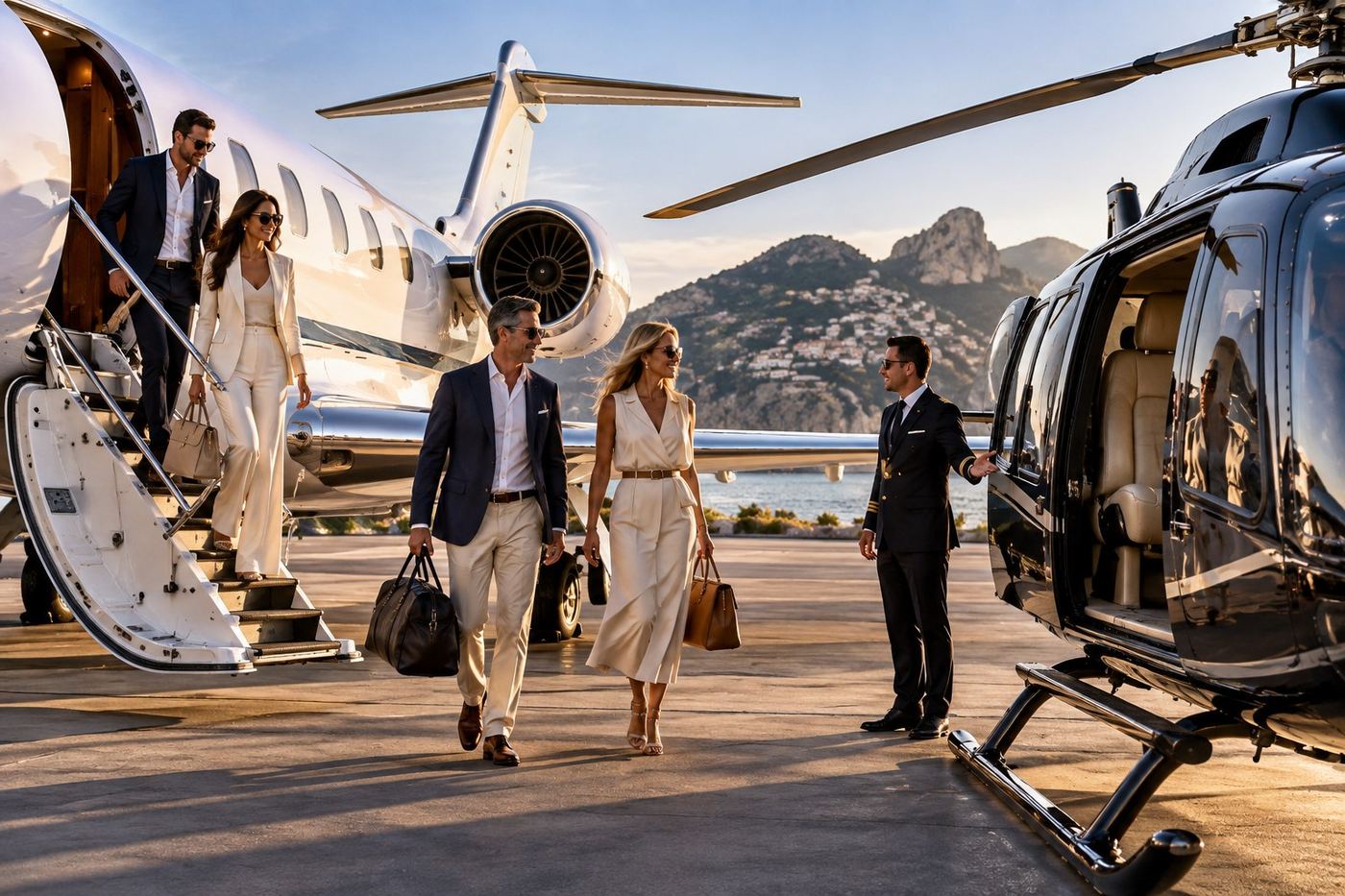
Segue la tratta principale, la più lunga in termini di distanza: un jet privato porta sempre i passeggeri più vicino al luogo in cui si trova lo yacht — a differenza dei grandi aeroporti commerciali, che si trovano solo nei pressi delle grandi città o dei poli turistici principali, gli aeroporti privati sono più numerosi e diffusi capillarmente sul territorio, e collegano aree remote, stabilimenti industriali, isole o comunità isolate.
È qui che la scelta dell'aeromobile pesa di più sull'intera esperienza: un jet in grado di atterrare su piste corte amplia sensibilmente le opzioni di scalo disponibili — Port Hercule, Port Vauban, Saint-Tropez, Monaco, Porto Cervo, Portofino, Marina di Stabia, Port Vell, Ibiza, Maiorca, Marbella, Porto Montenegro, Flisvos Marina diventano immediatamente tutte più vicine di quanto lo sarebbero con un volo commerciale di linea.
Il jet privato copre la tratta più lunga del viaggio, avvicinando i passeggeri il più possibile al luogo in cui si trova lo yacht.
L'ultimo miglio: l'elicottero fino al ponte
Dove il door-to-deck si compie davvero
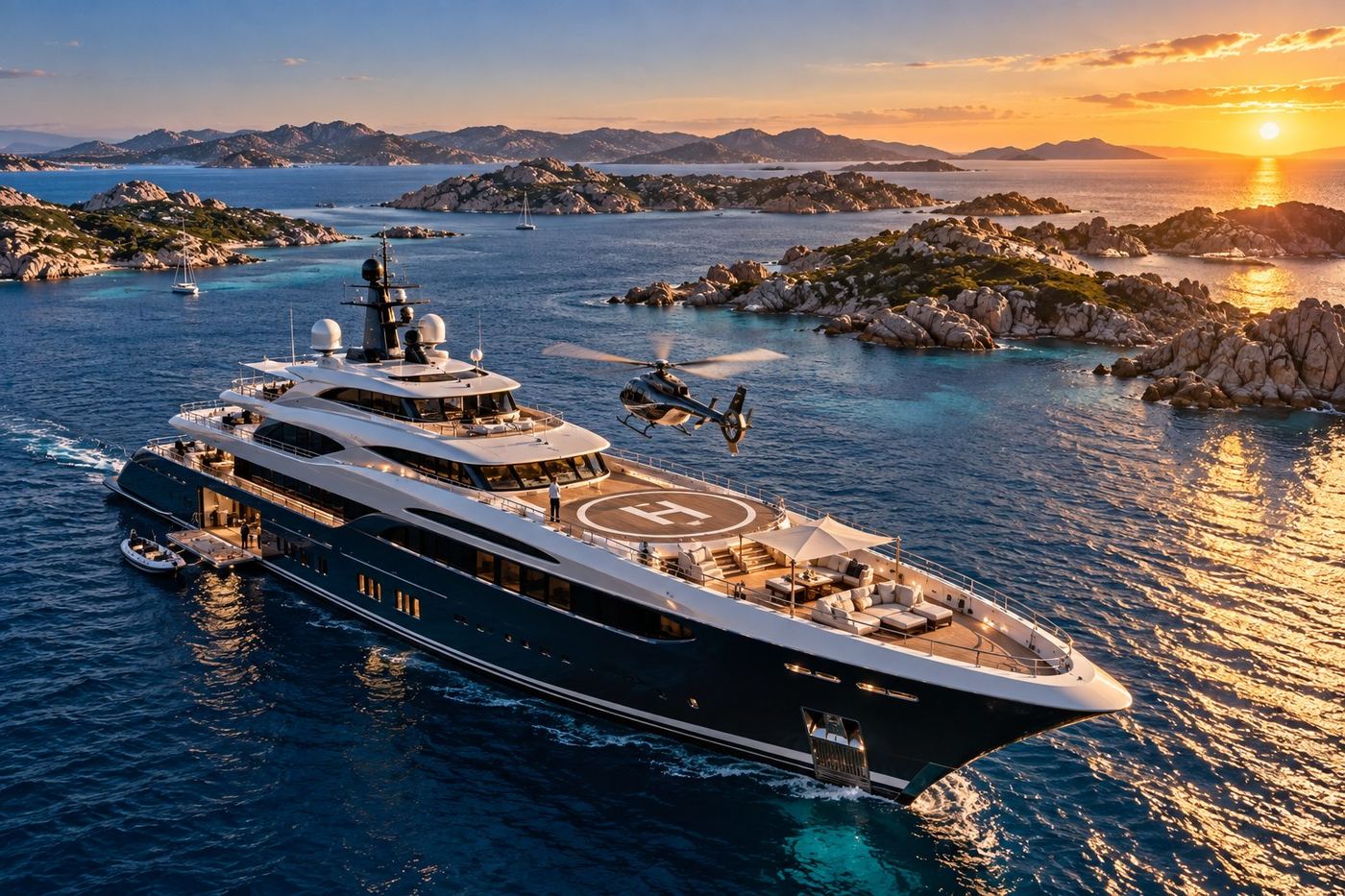
È l'elicottero a completare il tragitto, portando i passeggeri direttamente sul ponte dello yacht — un vantaggio che si apprezza pienamente quando il natante è ormeggiato in una baia isolata, o addirittura sta navigando in mare aperto e non è raggiungibile in altro modo. Il transfer in elicottero verso lo yacht richiede in genere pochi minuti di volo, ma è la fase più delicata dell'intero door-to-deck: naturalmente va sempre coordinata con il Comandante dello yacht in quanto resta comunque soggetta alle condizioni meteo-marine del momento, ma con il giusto coordinamento si riesce sempre a trovare la soluzione più sicura.
L'elipiattaforma è l'ultimo, decisivo metro del viaggio: dove il concetto di "door-to-deck" smette di essere una promessa di marketing e diventa un atterraggio reale.
Il nodo cruciale: peso e volume dei bagagli
C'è un vincolo tecnico che gli addetti ai lavori di questi trasferimenti conoscono bene, e che a volte sorprende chi vola per la prima volta con un transfert in elicottero: questi aeromobili hanno capienza e portata di peso limitate, molto più contenute di quelle di un jet privato. Un equipaggio al completo, con bagagli pieni per un soggiorno di più settimane a bordo, può facilmente superare il carico utile disponibile sull'ultima tratta.
Per questo, quando necessario, il trasferimento dei bagagli avviene separatamente da quello dei passeggeri: via aria, con una seconda rotazione dello stesso elicottero (oppure con un secondo velivolo dedicato al solo carico) oppure via mare, con un tender inviato dallo yacht stesso a recuperare i bagagli in banchina, mentre i passeggeri completano il tragitto in elicottero. Non è un imprevisto da gestire all'ultimo momento: è una delle tante variabili che devono essere calcolate già all'inizio della fase di pianificazione.
Passeggeri ed equipaggio possono proseguire subito verso l'elicottero, mentre i bagagli più ingombranti seguono un percorso proprio, calcolato a monte.
"Il door-to-deck non si misura in ore di viaggio, ma nel numero di decisioni che il cliente non deve prendere. Ogni bagaglio spostato via mare invece che via aria è una decisione presa al posto suo, prima ancora che se ne accorga."
Le fasi di un trasferimento door-to-deck
Ogni fase del door-to-deck è pensata perché il viaggio si concluda esattamente qui: sul ponte, non nei suoi pressi.
Raccolta delle informazioni. Numero di passeggeri, quantità e peso dei bagagli, posizione esatta dello yacht (in porto o in navigazione) e ovviamente se trattasi di "helipad-equipped yacht" oppure di una imbarcazione tradizionale.
Pianificazione dell'itinerario. Selezione dell'aeroporto più idoneo e vicino allo yacht, calcolo dei tempi di coincidenza tra le tre tratte, verifica della capacità di carico dell'elicottero disponibile in zona, posizionamento dello stesso in coincidenza con lo slot di atterraggio del jet in arrivo.
Coordinamento con il Comando dello yacht. Conferma dell'orario di arrivo, dell'approntamento dell'helipad per la procedura di sbarco dei passeggeri, ed eventuale organizzazione del tender per il recupero dei bagagli.
Prenotazione sincronizzata di NCC, jet privato ed elicottero, con margini di sicurezza tra una tratta e l'altra per assorbire eventuali ritardi.
Esecuzione del viaggio, con un unico referente a disposizione del cliente per l'intero percorso, dalla porta di casa al ponte.
Come lavoriamo con Your Private Jet
Il servizio door-to-deck è uno dei punti in cui il nostro modello di Air Charter Broker fa la differenza più concreta: coordiniamo NCC, jet privato ed elicottero come un unico itinerario, non come tre prenotazioni scollegate. La nostra rete di corrispondenti internazionali include un referente specializzato in yacht charter a Montecarlo, una delle piazze più rilevanti al mondo per questo tipo di trasferimenti: una risorsa che ci permette di seguire con cognizione diretta anche i dettagli operativi più importanti.
Hai una richiesta specifica?
Contattaci per ricevere una valutazione personalizzata in base alla tratta, al numero di passeggeri e alle tue esigenze operative.
"There's a subtle but decisive difference between 'getting close to the yacht' and 'arriving on the yacht'. Any travel agency can offer the first. The second requires someone behind the scenes, someone who knows the trade, to have perfectly synchronised THREE independent, distinct services (a car, an aircraft and a helicopter) so that the passenger's last step down takes them directly onto the yacht's deck."
This is, in short, a door-to-deck service: accompanying the client from their front door all the way to the yacht's deck, with nothing in between — a missed connection due to a delayed flight, a lost bag, a poorly timed transfer — left to chance.
What Is a Door-to-Deck Transfer
The defining feature of this service is intermodality: three different modes of transport that the client would otherwise have to source and book separately, but which we treat as a single journey under a single point of coordination. Not three independent bookings the client has to arrange and fit together themselves, but one travel itinerary with one point of coordination, in which every leg is planned around the one that follows.
Whether the yacht is moored in a port like Monaco or under way around the Aeolian Islands, the door-to-deck principle stays exactly the same: one coordinated journey from the front door to the yacht's deck, rather than three separate problems to manage.
First Leg: Chauffeured Transfer from Home to the Airport
The starting point
The journey begins with a chauffeured car service (NCC), with a vehicle suited to the number of passengers and the volume of luggage, collecting the clients directly from their home. No parking to deal with, no public transfer to coordinate: the driver arrives at the agreed time and takes the passengers to the private terminal (FBO) at the departure airport — naturally, it is the client who freely chooses when and at what time they wish to depart. Check-in and boarding for passengers and luggage takes just 15 minutes.
The chauffeured car service is the first link in the chain: punctuality and comfort right from the front door, synchronised with the flight's actual schedule.
The Private Flight: The Longest Leg
The heart of the journey
Next comes the main leg, the longest in terms of distance: a private jet always brings passengers closer to wherever the yacht is located — unlike major commercial airports, which are only found near large cities or major tourist hubs, private airports are more numerous and spread far more widely across the territory, connecting remote areas, industrial sites, islands and isolated communities.
This is where the choice of aircraft matters most to the whole experience: a jet capable of landing on short runways significantly widens the range of available stopovers — Port Hercule, Port Vauban, Saint-Tropez, Monaco, Porto Cervo, Portofino, Marina di Stabia, Port Vell, Ibiza, Majorca, Marbella, Porto Montenegro, Flisvos Marina all instantly become closer than they would be on a scheduled commercial flight.
The private jet covers the longest leg of the journey, bringing passengers as close as possible to wherever the yacht is located.
The Last Mile: The Helicopter to the Deck
Where door-to-deck truly delivers
It is the helicopter that completes the journey, taking passengers directly onto the yacht's deck — an advantage that is fully appreciated when the vessel is moored in a secluded bay, or is even under way on open water and cannot be reached any other way. The helicopter transfer to the yacht usually takes only a few minutes of flight time, but it is the most delicate phase of the entire door-to-deck journey: it must always be coordinated with the yacht's Captain, as it remains subject to the prevailing sea and weather conditions at the time, but with the right coordination the safest solution can always be found.
The helipad is the last, decisive stretch of the journey: where the concept of "door-to-deck" stops being a marketing promise and becomes an actual landing.
The Crucial Point: Luggage Weight and Volume
There is a technical constraint well known to those who work on these transfers, and one that sometimes surprises first-time helicopter transfer passengers: these aircraft have limited capacity and weight allowance, far lower than that of a private jet. A full crew, with luggage packed for a multi-week stay on board, can easily exceed the payload available on the final leg.
For this reason, when necessary, luggage is transferred separately from the passengers: by air, with a second rotation of the same helicopter (or a second aircraft dedicated solely to cargo), or by sea, with a tender sent by the yacht itself to collect the luggage at the quayside while the passengers complete the journey by helicopter. This is not a last-minute contingency to manage: it is one of many variables that must be factored in from the very start of the planning stage.
Passengers and crew can move straight on to the helicopter, while bulkier luggage follows its own route, planned in advance.
"Door-to-deck isn't measured in hours of travel, but in the number of decisions the client doesn't have to make. Every bag moved by sea instead of by air is a decision made on their behalf, before they've even noticed."
The Stages of a Door-to-Deck Transfer
Every stage of the door-to-deck journey is designed so it ends exactly here: on the deck, not somewhere near it.
Gathering the information. Number of passengers, amount and weight of luggage, the yacht's exact position (in port or under way), and of course whether it's a "helipad-equipped yacht" or a traditional vessel.
Itinerary planning. Selecting the most suitable airport closest to the yacht, calculating connection times between the three legs, checking the payload capacity of the helicopter available in the area, and positioning it to coincide with the arriving jet's landing slot.
Coordination with the yacht's Command. Confirming the arrival time, readiness of the helipad for passenger disembarkation, and, where needed, arranging the tender to collect the luggage.
Synchronised booking of the chauffeured car, private jet and helicopter, with safety margins between each leg to absorb any delays.
Execution of the journey, with a single point of contact available to the client for the entire route, from the front door to the deck.
How We Work at Your Private Jet
The door-to-deck service is one of the areas where our Air Charter Broker model makes the most concrete difference: we coordinate the chauffeured car, private jet and helicopter as a single itinerary, not as three disconnected bookings. Our network of international correspondents includes a specialist in yacht charter based in Monte Carlo, one of the world's most important hubs for this type of transfer — a resource that lets us follow even the most important operational details with first-hand knowledge.
Have a specific request?
Contact us for a personalised assessment based on the route, number of passengers and your operational needs.